

Welcome to the Queue
As Western nations harden their borders, reciprocity becomes the only coherent principle left

To be born English is to win first prize in the lottery of life
-Cecil Rhodes
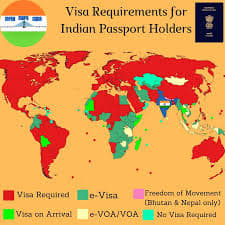
There are few experiences more humbling than applying for a visa to a Western country.
One is invited, often at considerable expense, to submit bank statements, employment records, travel itineraries, hotel reservations, letters of invitation, proof of intent to return home, and occasionally what feels like a notarised declaration from one’s grandmother attesting to one’s moral character. The applicant then waits patiently while an anonymous official determines whether he is sufficiently trustworthy to spend a fortnight admiring cathedrals, attending a conference, or taking photographs of landmarks already viewed by several hundred million people.
![UK Visa for Indians: Application, Processing Time, Fees in [2025] - Fly For Holidays](https://substackcdn.com/image/fetch/$s_!qJFI!,f_auto,q_auto:good,fl_progressive:steep/https%3A%2F%2Fsubstack-post-media.s3.amazonaws.com%2Fpublic%2Fimages%2F3f4fd298-0a51-4d71-ba0b-bcb2e075bc46_815x562.webp "UK Visa for Indians: Application, Processing Time, Fees in [2025] - Fly For Holidays")
The process is familiar to citizens across Asia, Africa, Latin America and much of the Middle East. It is so familiar, in fact, that many have ceased to regard it as remarkable. Like bad weather or airport food, it is simply accepted as one of life’s minor indignities.
What remains remarkable is that the arrangement is almost entirely one-sided.
The citizen of Jakarta, Lagos, Cairo or Mumbai may spend weeks assembling documents merely to visit London, Paris or New York. Meanwhile, the citizen of London, Paris or New York frequently lands in Jakarta, Lagos, Cairo or Mumbai with little more administrative burden than locating a functioning pen to complete an arrival form. Entire regions of the world have effectively rolled out the red carpet for Western visitors, investors, retirees, influencers, digital nomads and assorted seekers of adventure.
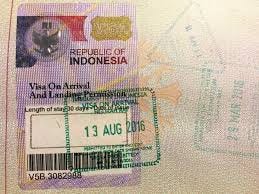
For decades, this asymmetry was justified by a series of assumptions so deeply embedded that they scarcely required articulation.
The first was economic. Much of Asia, Africa, Latin America and the Middle East wanted Western visitors. They brought hard currency, filled hotel rooms, patronised restaurants and returned home with photographs that doubled as free advertising. Governments were understandably reluctant to place obstacles in the path of people who arrived carrying foreign exchange and departed carrying souvenirs.
The second was psychological. Western travellers were generally regarded as tourists rather than prospective migrants. They would arrive, admire the scenery, complain mildly about the plumbing, purchase a refrigerator magnet and eventually return home. Whatever concerns Western nations might harbour about demographic change, social cohesion or parallel communities, few imagined that Europeans and Americans would one day establish substantial overseas enclaves of their own.
For a time, the assumption appeared reasonable.
It should be acknowledged that even at the height of Western passport privilege, there remained a distinction between visiting and staying. A British tourist could not simply wander into Thailand and declare himself a permanent resident. An American arriving in Indonesia was not automatically entitled to settle there indefinitely. Long-term residence generally required additional permissions, accommodating the systems often proved to be difficult, and enforcement was sometimes applied lightly.
Yet the line between visitor and resident has become increasingly blurred.
The backpacker becomes a digital nomad. The digital nomad becomes an entrepreneur. The entrepreneur becomes an expatriate. The expatriate becomes a permanent fixture. What begins as a holiday gradually acquires many of the characteristics of migration while retaining many of the privileges associated with tourism.
There is also a deeper historical irony lurking beneath the surface.
A visitor from Cairo, Delhi, Lagos, or Lima may spend months assembling documents and satisfying consular officials merely to obtain the opportunity to enter a Western country. Having successfully navigated this bureaucratic obstacle course, he may then spend his afternoon gazing upon artefacts originating from his own civilisation.
Many of these objects remain the subject of repatriation disputes. The familiar argument against their return is that their countries of origin cannot be trusted to preserve them adequately. They are safer, we are told, under Western stewardship.
The implication is difficult to miss.
A civilisation may be deemed incapable of caring for its own heritage, yet somehow expected to regard the resulting arrangement as evidence of enlightened custodianship. Its citizens, meanwhile, are obliged to demonstrate their trustworthiness through bank statements, hotel bookings and letters from employers before being permitted to view the collection.
One almost admires the elegance of the arrangement.
The artefacts travel freely.

Their descendants require a visa.
Yet because these assumptions persisted for so long, they acquired the appearance of natural law. The privilege of movement enjoyed by Western citizens ceased to look like a privilege at all. It became simply the way the world worked. Few articulated the principle openly. Fewer still questioned it.
Then something curious happened.
Across Europe and North America, immigration scepticism migrated from the political fringe to the political mainstream. Parties once regarded as eccentric now shape governments. Arguments once whispered in obscure corners of the internet are debated in parliaments and newspaper columns. The central claim, stripped of euphemism, is straightforward: societies have a right to protect themselves from large-scale migration by people who may not share their values, customs, loyalties or ways of life.

One may agree with that proposition or reject it entirely. What is difficult to do is accept it only when applied in one direction.
For if cultural compatibility is a legitimate concern in Berlin, why is it not a legitimate concern in Bangkok? If social cohesion matters in Manchester, why should it not matter in Manila? If Western nations are entitled to ask whether newcomers will integrate into local society, why are Asian, African, Arab and Latin American countries expected to suspend the same curiosity when confronted with growing communities of Western migrants, long-term visitors and self-described expatriates?
The question becomes especially pertinent when one observes that many of the behaviours condemned in immigrants to the West are routinely tolerated, even celebrated, when exhibited by Westerners abroad.
The businessman who relocates to Dubai while demanding every comfort of London. The digital nomad who spends years in Bali without learning a dozen words of Indonesian. The retiree in Thailand who complains incessantly that local institutions fail to operate exactly as they would in Surrey. The influencer who treats entire countries as little more than backdrops for content production. These figures are not aberrations. They are fixtures of the modern global landscape.
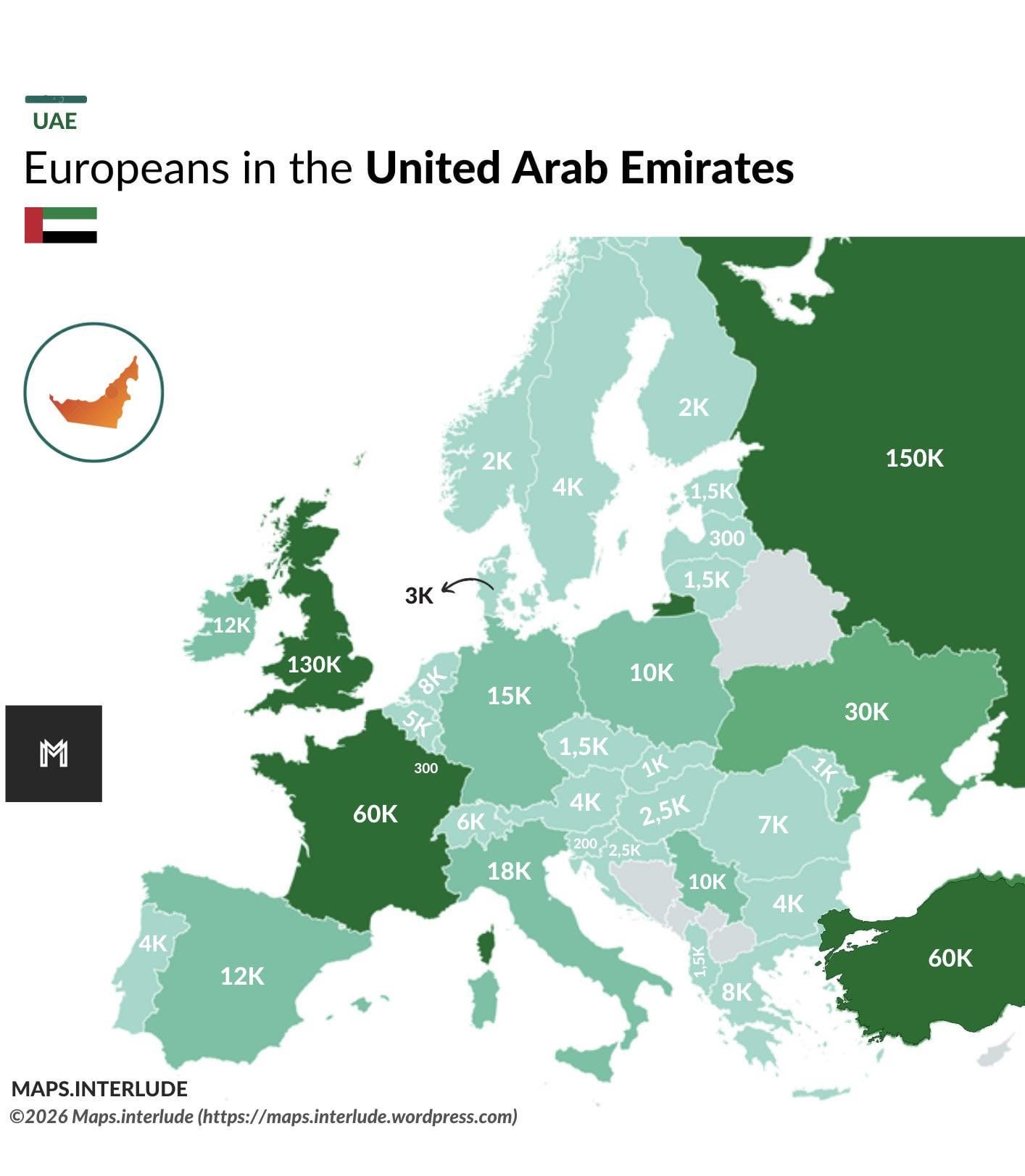
And yet they are rarely described using the language that Western societies increasingly employ for others. They are not immigrants. They are expatriates. They are not burdens. They are economic contributors. They are not failing to integrate. They are enjoying an international lifestyle.
Such linguistic gymnastics would be amusing were they not so revealing.
Perhaps the time has come for a simple thought experiment. Let Asia, Africa, Latin America and the Middle East adopt precisely the same standards that many Western nations now insist are prudent, reasonable and necessary. Not hostility. Not xenophobia. Not exclusion. Merely reciprocity.
Western visitors should encounter the same scrutiny that Western governments consider appropriate for everyone else. The same paperwork. The same interviews. The same financial disclosures. The same suspicion. The same burden of proving that they are desirable guests rather than potential liabilities.
After all, if these measures are essential safeguards of civilisation in the West, then surely civilisation elsewhere deserves no less protection.
The New Orthodoxy of Restriction
Not long ago, one could be forgiven for thinking that history had reached its destination and found it rather agreeable.
The great ideological struggles of the twentieth century were supposedly over. Borders would become increasingly porous. Trade, travel and migration would knit humanity into a vast cosmopolitan tapestry. National identities would soften around the edges. The world, we were assured, was becoming a global village.
Then the villagers started locking the gates.
From Washington to Warsaw, from Amsterdam to Rome, from London to Copenhagen, a remarkable political realignment has taken place. Immigration scepticism, once confined to eccentric pamphleteers and angry men in pub corners, now occupies ministerial offices and government benches. Politicians who would have been dismissed as alarmists a generation ago now articulate concerns shared by millions of voters.
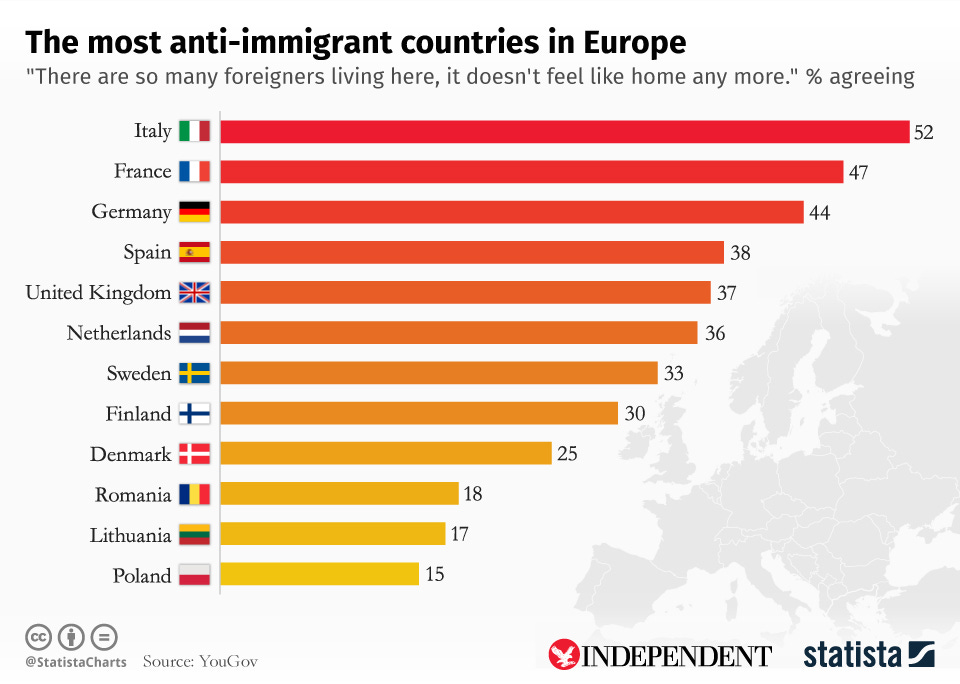
The arguments themselves are by now familiar.
Migrants, it is said, place pressure on housing markets. They strain public services. They suppress wages. They import cultural practices that clash with local norms. They form parallel communities. They resist integration. In more dramatic renditions, they may even constitute a potential fifth column whose loyalties lie elsewhere.
One need not subscribe to these views to acknowledge their political potency. Nor is it necessary to adjudicate their merits here. The debate has already consumed enough newspaper columns, television studios and parliamentary sessions to furnish several lifetimes of argument.
What is striking is not the arguments themselves, but the assumptions that accompany them.
Consider the language routinely employed in contemporary immigration discourse.
A nation, we are told, has the sovereign right to determine who enters its territory. A society has the right to preserve its cultural character. People have the right to expect newcomers to adapt to local customs rather than demand that local customs adapt to them.
Very well.
Let us accept these principles for the sake of argument.
What follows?
Curiously, many of those who champion these propositions become noticeably uncomfortable when they are applied beyond Western frontiers. The moment Bangkok, Jakarta, Dubai, or Nairobi seeks to preserve its own cultural character, the conversation changes. The moment a non-Western society expresses concern about foreign influence, demographic change or cultural displacement, the rhetoric of sovereignty suddenly gives way to lectures about openness and tolerance.
Apparently, self-preservation is a virtue in Paris but a vice in Phuket.
When Western societies seek to preserve their traditions, they are defending national identity. When non-Western societies do the same, they are often portrayed as resistant to progress, suspicious of modernity or insufficiently cosmopolitan. The concern itself is rarely condemned as immoral. Rather, it is treated as quaint, parochial or faintly backward. It belongs, we are subtly informed, to an earlier stage of development from which enlightened societies ought to have graduated.
One is reminded of the old colonial assumption that non-Western societies exist chiefly as venues for Western self-actualisation. Their role is to welcome visitors, accommodate preferences and facilitate experiences. They are destinations rather than sovereign communities. Holiday resorts rather than nations. Stages upon which others perform.
The contradiction becomes impossible to ignore.
If integration is a reasonable expectation in Birmingham, why is it unreasonable in Bali? If social cohesion matters in Stockholm, why does it cease to matter in Singapore? If a government may legitimately ask whether newcomers will respect local values in Berlin, why should the same question be considered offensive when asked in Bangkok?
The answer, of course, is that many people do not actually believe in universal principles. They believe in privileges.
A principle applies equally regardless of who exercises it. A privilege belongs only to those with sufficient power to claim it.
For much of the modern era, Western nations enjoyed the privilege of determining the terms upon which human mobility would operate. Their citizens could traverse the globe with relative ease while others endured scrutiny, suspicion and bureaucracy. Their concerns about cultural preservation were regarded as serious. Similar concerns expressed elsewhere were often dismissed as provincial or reactionary.
Yet the world is changing.
The rise of Asia, the growing influence of the Gulf states, the emergence of new economic centres across Africa and Latin America, and the gradual diffusion of global power have begun to erode assumptions that once seemed permanent.
As this transition unfolds, a simple question presents itself.
If Western nations genuinely believe that immigration policy should be guided by concerns about integration, cultural compatibility and social cohesion, why should the rest of the world not adopt the very same standards?
One suspects the answer may reveal less about immigration than about the enduring habit of Western exceptionalism.
The Expat Myth
Language has always been the preferred instrument of social class.
The Victorians understood this perfectly. An invasion became a civilising mission. Extraction became commerce. Empire became stewardship. The right choice of words could transform an act of naked self-interest into a noble contribution to humanity.
Little has changed.
Consider, for example, one of the most revealing words in the modern political vocabulary: expatriate.
The term evokes a rather specific image. A Briton enjoying retirement in Thailand. An American software developer working remotely from Bali. A French consultant in Dubai. A German entrepreneur in Ho Chi Minh City. Such people are rarely described as immigrants. They are expats.
The distinction is fascinating because nobody can quite explain it without becoming immediately uncomfortable.
After all, what is an immigrant?
Conventionally, it is someone who leaves one country and settles in another, either temporarily or permanently.
And what, precisely, is an expatriate?
Upon inspection, it turns out to be someone who leaves one country and settles in another, either temporarily or permanently.
The difference appears to be less a matter of definition than of geography. More specifically, it often depends on whether the person in question originates from a wealthy Western country.
A Nigerian accountant who moves to London is an immigrant. A British accountant who moves to Lagos is an expat. An Indonesian engineer who settles in Manchester is an immigrant. A Manchester engineer who settles in Jakarta is an expat. A Moroccan entrepreneur opening a business in Paris is an immigrant entrepreneur. A Parisian entrepreneur opening a business in Marrakech is an international professional. There’s also an ethnic component to these assumptions that is a discussion for another article, but it has to do with the built-in assumption that white Europeans are generally regarded as expats, while Asians and Africans, despite holding Western passports, are regarded as immigrants at first glance.

The labels perform an important social function. They reassure us that some forms of migration are fundamentally different from others.
Immigrants, according to popular stereotypes, arrive seeking opportunity. Expats are pursuing adventure. Immigrants relocate for economic reasons. Expats are embracing a lifestyle. Immigrants alter the character of communities. Expats enrich them. Immigrants form enclaves. Expats build communities.
The same activity takes on an entirely different moral complexion depending on who is doing it. One occasionally wonders what would happen if these conventions were reversed. Suppose a newspaper described a million South Asians living in Britain as a vibrant expatriate community. Suppose discussions about immigration in Europe instead referred to expatriate neighbourhoods, expatriate-owned businesses, and expatriate cultural associations. The absurdity would be immediately apparent, yet the reverse formulation goes unnoticed.
Indeed, entire industries have emerged around this linguistic distinction. There are expatriate magazines, clubs, property consultants, tax advisers, and social networks. One can spend years living in another country while being carefully insulated from the unpleasant suggestion that one has actually become an immigrant.
The consequences extend beyond semantics. Language shapes expectations. The immigrant is expected to adapt. The expat is expected to be accommodated. The immigrant ought to learn the local language. The expat may, if he feels particularly adventurous, master enough phrases to order a beer. The immigrant is encouraged to integrate into society. The expat often constructs a parallel society populated largely by other expats.
One of the more amusing spectacles of modern globalisation is the sight of Western migrants establishing communities abroad that, if replicated by foreigners in Western countries, would become the subject of endless newspaper commentary.
Entire districts emerge where English is the dominant language. Restaurants cater primarily to foreign tastes. Businesses market themselves almost exclusively to foreigners. Social circles remain overwhelmingly international. Local customs are observed selectively and often superficially.
Yet these arrangements are rarely described as failures of integration. Instead, they are celebrated as cosmopolitanism. The phenomenon is particularly visible in parts of Southeast Asia. One can reside for years in certain districts of Bali, Bangkok or Phuket while interacting only minimally with local society. Housing, entertainment, dining, employment and social life can all be organised within an expatriate ecosystem. A visitor may encounter dozens of fellow Europeans or Americans before holding a meaningful conversation with a local resident.
Again, there is nothing inherently wrong with this. The point is consistency.
If parallel communities are a cause for concern in Birmingham, why are they evidence of international sophistication in Bali? If preserving cultural cohesion is a legitimate objective in Copenhagen, why should Jakarta or Bangkok be denied the same consideration?

The answer may be that what is often presented as a universal principle is, in reality, a selective one. Immigration is a problem when other people do it.
When Westerners do it, it acquires a different name.
Would Westerners Pass Their Own Integration Test?
One of the more fashionable demands in contemporary Western politics is that immigrants must integrate.
The word itself has acquired an almost sacred status. Politicians invoke it with the solemnity once reserved for constitutional principles. Editorialists lament its absence. Think-tank reports measure it. Television panellists debate it. Entire elections are fought over competing interpretations of what it means.
At its core, however, the proposition is fairly simple. Those who move to a new country should make a genuine effort to adapt to its customs, respect its norms, learn its language and participate in its society.
A perfectly reasonable expectation.
The interesting question is whether Western migrants abroad would consistently satisfy the standard they so enthusiastically advocate. The evidence, at the very least, is mixed.
Across much of Asia, the Middle East and Latin America, sizeable Western communities have emerged that function with remarkably little need for cultural adaptation. English serves as the default language. Western restaurants abound. Imported products fill supermarket shelves. Entire neighbourhoods cater primarily to foreign tastes and preferences.

One can spend years abroad while remaining culturally anchored to one’s country of origin. Indeed, many do precisely that. The irony is difficult to miss.
The immigrant in Europe is frequently told that successful integration requires learning the local language. Yet one routinely encounters Western residents who have spent a decade in Thailand, Indonesia or Vietnam without acquiring more than a handful of conversational phrases.
The immigrant in Britain is encouraged to participate in British society rather than retreat into an ethnic enclave. Yet expatriate districts throughout the developing world often consist of foreigners socialising almost exclusively with other foreigners.
The immigrant in Germany is expected to respect local customs and traditions. Yet countless Western visitors regard local customs abroad as optional suggestions rather than social obligations.
The issue is not merely one of language or social habits. It is also a matter of expectations.
Many Western travellers arrive in foreign countries with an implicit assumption that the world should accommodate them. They expect familiar food, familiar entertainment, familiar conveniences and familiar standards of service. Should these comforts be absent, disappointment quickly mutates into condemnation.
One need only spend a few minutes reading online travel reviews to encounter a peculiar genre of complaint.
A country is criticised because local residents do not speak sufficient English. A restaurant is condemned because it does not serve food familiar to foreign tastes. A city is dismissed because public transport functions differently from what visitors are accustomed to. A society is judged deficient because it refuses to replicate the social norms of another continent.
The underlying premise is astonishing when one pauses to examine it. Entire civilisations are evaluated according to their ability to approximate Western expectations. Should they succeed, they are modern. Should they fail, they are backward. The old colonial impulse survives in surprisingly mundane forms.
Corruption Is a Foreign Country

There is a road in north London called The Bishops Avenue, and if you walk down it on a grey afternoon, you will notice that several of the largest houses in Britain appear to be empty. Not between tenants. Not mid-renovation. Empty in the deeper, stranger sense: dark windows, ivy through the railings, a slow architectural rot that costs more per year t…
There is perhaps no clearer illustration than the perennial controversy surrounding alcohol and cultural norms.
Visitors willingly travel to countries whose religious and cultural traditions place restrictions upon alcohol consumption. Upon arrival, some promptly complain that such restrictions exist. The host society is expected to alter itself in order to accommodate the preferences of the guest.

One struggles to imagine the reverse arrangement. A visitor to Britain demanding that public houses cease serving alcohol for religious reasons would be regarded as absurd. Yet demands for local adaptation often seem entirely reasonable when directed at non-Western societies.
This asymmetry extends far beyond tourism.
In recent years, destinations such as Bali, Bangkok, Dubai and Ho Chi Minh City have actively courted foreign residents seeking lower living costs, warmer climates and more favourable tax arrangements. There is nothing objectionable about this. Human beings have always sought better opportunities.
The question is whether opportunity carries reciprocal obligations.
If Western governments insist that newcomers must adapt to local culture rather than expecting local culture to adapt to them, should Western migrants abroad not be held to the same standard?
If integration is genuinely a universal principle, then it must apply universally. If it is not universal, then it is not a principle at all. It is merely a demand imposed upon others. And like most demands imposed upon others, it tends to sound considerably less persuasive when reflected back towards its source.
The Curious Tolerance of Illegality
One of the more entertaining features of modern immigration debates is the universal agreement that laws must be obeyed.
Borders, we are informed, are not suggestions. Visa conditions are not optional. Immigration systems exist for a reason. Those who circumvent them undermine public trust, distort labour markets and erode respect for the rule of law.
Again, a perfectly reasonable position.
Yet it becomes considerably more complicated when one examines the behaviour of many Western migrants abroad.
For years, countries throughout Asia, Latin America and parts of Africa have played host to a peculiar species of traveller known colloquially as the visa runner.
The arrangement is elegantly simple.
A tourist visa expires. Rather than applying for proper residency, work authorisation or long-term immigration status, the individual leaves the country briefly, crosses a border, obtains a fresh entry stamp and returns. Repeat as necessary. What was intended as a short-term visit quietly becomes a semi-permanent existence.
The practice became so common in certain parts of the world that entire industries emerged to facilitate it. Transport companies advertised border runs. Online forums exchanged advice. Veteran practitioners compared strategies with the enthusiasm of tax accountants discussing deductions.
One is tempted to imagine the reaction if millions of foreigners adopted a similar approach in Western countries.
Suppose a visitor to Britain repeatedly exited the country every few months before returning indefinitely on tourist status. Suppose a foreign national openly discussed exploiting loopholes in immigration procedures in order to avoid obtaining the appropriate permits.
Would this be celebrated as entrepreneurial ingenuity?
Or would it be cited as evidence that immigration controls require strengthening?
The answer is not difficult to discern.
Then there is the matter of employment.
The digital nomad has become one of the defining figures of the twenty-first century. Armed with a laptop and an internet connection, he traverses the globe in search of lower taxes, cheaper rent and superior weather.
There is nothing inherently objectionable about remote work. The issue is that many countries never designed their immigration systems around such arrangements. Tourist visas were intended for tourism. They were not necessarily intended to facilitate years of continuous residence while earning income abroad.
Yet in many host countries, enforcement remains inconsistent. Authorities often tolerate practices that would provoke intense scrutiny elsewhere.
The situation grows even more curious when one considers the economic impact.
In Western immigration debates, concerns about housing affordability occupy a central place. Rising rents, property speculation and displacement of local residents are frequently cited as reasons for tighter immigration controls.
Fair enough.
But these concerns are hardly unique to London, Toronto or Amsterdam.
In numerous tourist hotspots across Southeast Asia and Latin America, the influx of comparatively affluent foreigners has exerted substantial pressure upon local housing markets. Residents increasingly find themselves competing for accommodation with individuals whose incomes derive from wealthier economies and stronger currencies.
The resulting tensions should surprise nobody.
Economics, unlike ideology, remains stubbornly indifferent to nationality.
The arrival of large numbers of outsiders with greater purchasing power affects local markets regardless of whether those outsiders originate from Syria or Sweden.
Yet perhaps the most revealing double standard concerns not immigration law but criminality.
One of the recurring themes of Western immigration debates is the association of migration with crime. Entire political movements have been built upon warnings about criminal foreigners. Newspaper headlines routinely highlight the nationality of offenders when those offenders happen to be migrants.
Yet the narrative often shifts dramatically when the offender carries a Western passport abroad.
When a Mexican cartel member appears in an American news story, he becomes evidence of a wider social pathology. When a European or American tourist is arrested for drug possession in Southeast Asia, he often becomes a tragic protagonist. The headlines are suddenly populated with words such as “student”, “backpacker”, “tourist” or “traveller”. The focus shifts towards the harshness of local laws, the severity of the punishment or the alleged deficiencies of the justice system.
The offender remains an individual.
The system becomes the villain.
One does not need to support draconian drug laws to notice the asymmetry.
A foreigner committing a crime in the West is frequently discussed as part of a broader immigration problem. A Westerner committing a crime abroad is more likely to be portrayed as a misguided individual who has fallen foul of unfamiliar customs or an unforgiving legal system.
The passport changes.
The moral framing changes with it.
Perhaps the most extraordinary phenomenon of all, however, is the emergence of the begpacker.
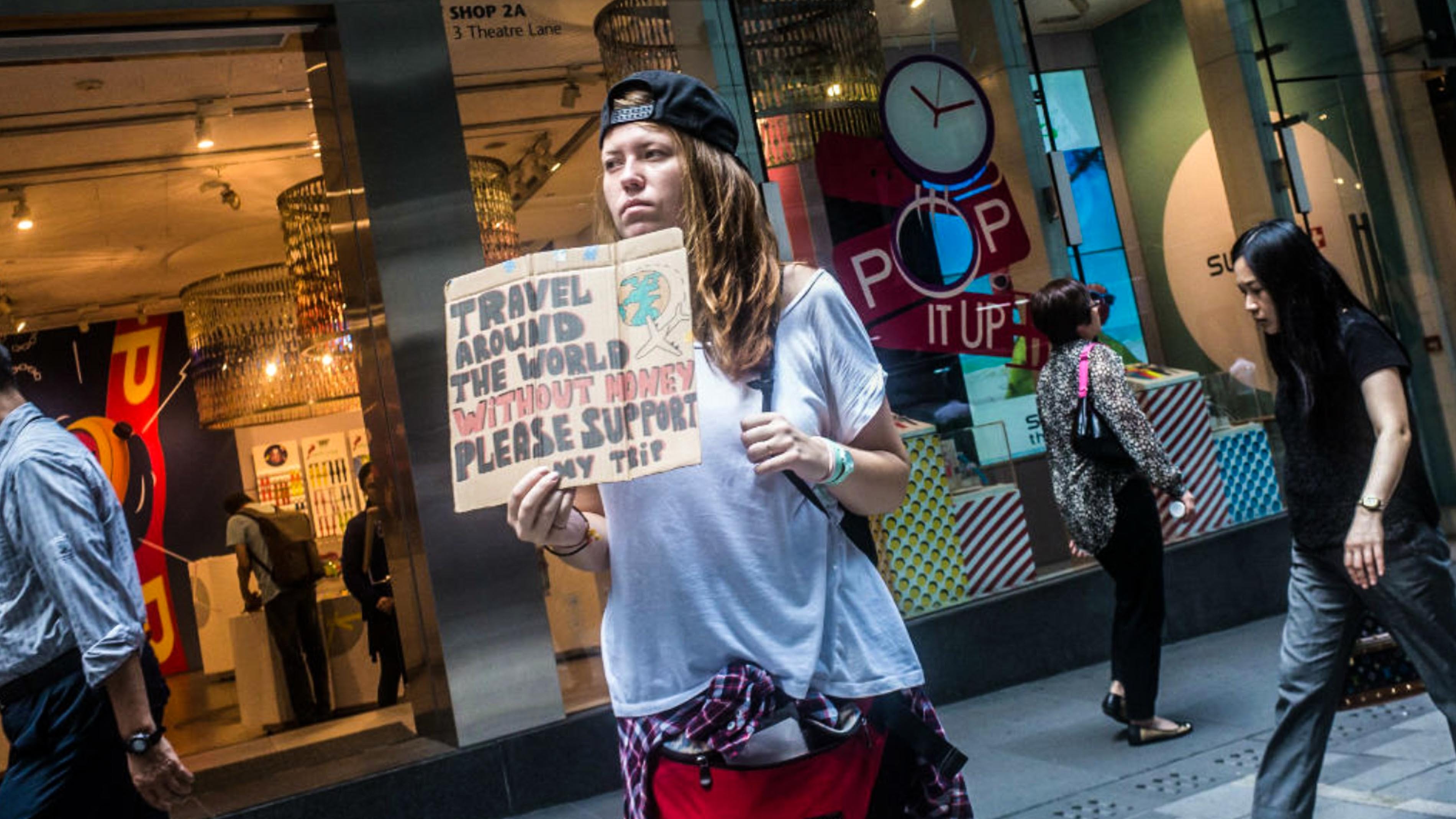
Future historians, assuming they survive long enough to catalogue humanity’s eccentricities, may struggle to comprehend that this was once a real thing.
The begpacker is typically a citizen of a wealthy country who travels to a poorer country and subsequently solicits money from local residents in order to continue travelling.
The practice combines entitlement, absurdity and self-confidence in proportions rarely witnessed outside politics.
One occasionally encounters travellers selling trinkets, performing music or simply requesting donations from people whose average incomes are a fraction of their own. The spectacle would be comic were it not so revealing.
Imagine, for a moment, the reverse.
Imagine a Cambodian tourist in Paris funding his European holiday by asking French pedestrians for financial assistance. Imagine a Nigerian backpacker arriving in Copenhagen with no clear means of support and expecting local residents to subsidise his travels.
The discussion would not revolve around cultural enrichment.
It would revolve around deportation.
None of this is to suggest that Western migrants are uniquely prone to lawbreaking, exploitation or irresponsibility. Such behaviour is hardly confined to any nationality.
That is precisely the point.
Human beings are human beings.
They exploit loopholes. They seek economic advantage. They circumvent inconvenient regulations. They pursue their interests with varying degrees of respect for local laws and customs.
Which is why it is so peculiar that these realities are often treated as universal truths when discussing immigration into Western countries and unfortunate exceptions when discussing Western migration elsewhere.
If concerns about legal compliance, labour-market effects, criminality and housing pressures justify heightened scrutiny in London or Washington, then surely Bangkok, Bali and Mexico City are entitled to the same concerns.
Unless, of course, one believes that the laws of immigration apply differently depending upon the passport being inspected.
And that, despite much rhetoric to the contrary, appears to be precisely what many people believe.
Dubai, Bali and the New Geography of Privilege
For much of modern history, the direction of human aspiration was assumed to be self-evident.
The ambitious travelled west. The talented travelled west. The educated travelled west. The wealthy, if they were not already western, generally sought to become so.
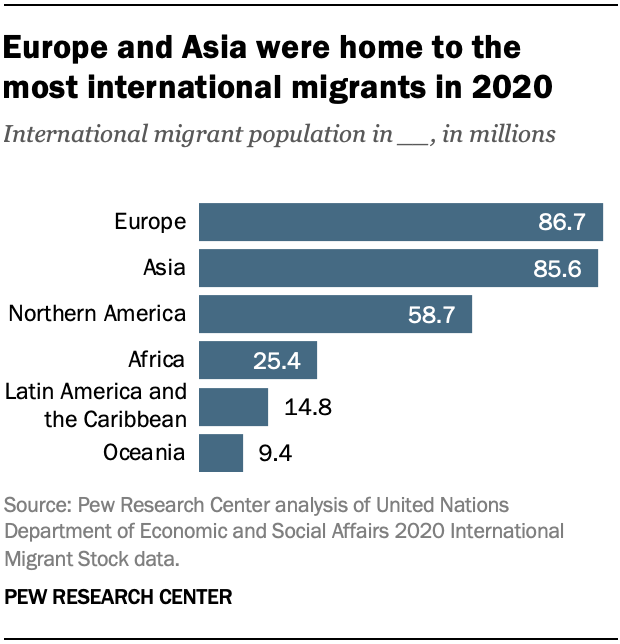
From the end of the Second World War until well into the twenty-first century, the dominant flow of migration resembled a planetary river. People moved from poorer regions towards richer ones, from instability towards stability, from the periphery towards the centre.
The arrangement became so familiar that many mistook it for a law of nature. It was not. It was merely a reflection of a particular historical moment.
Today, one can observe the emergence of a rather different pattern.
The British accountant leaving Manchester for Dubai. The American software developer relocating to Bali. The German entrepreneur establishing himself in Bangkok. The French consultant moving to Abu Dhabi. The Australian retiree settling in Vietnam. None of these individuals are fleeing persecution. Most are not escaping poverty. Many are already citizens of some of the wealthiest countries in human history.
They are moving because they believe life elsewhere may be better. The implications of this deserve more attention than they usually receive.
For decades, Western political discourse has often portrayed migration as something that happens to the West. The rest of the world supplies migrants. The West receives them.
Yet increasingly, Western citizens themselves are becoming migrants. Sometimes they are pursuing lower taxes. Sometimes they are pursuing lower costs of living. Sometimes they are seeking greater personal safety. Sometimes they are escaping housing markets so distorted that home ownership has become a distant fantasy. Sometimes they are simply searching for a higher quality of life. Whatever the motivation, the direction of movement is revealing.
Consider Dubai.
A generation ago, many Western observers regarded the Gulf as little more than a desert curiosity fortunate enough to sit atop hydrocarbons. Today, professionals from Europe and North America relocate there in substantial numbers, attracted by low taxation, modern infrastructure, relative security and economic opportunity.
The same pattern is visible elsewhere.
Cities throughout Southeast Asia increasingly attract entrepreneurs, retirees and remote workers whose purchasing power stretches considerably further than it does in London, San Francisco or Sydney.
One occasionally hears these destinations described as “cheap”. The description is revealing. What is often presented as affordability is, from another perspective, simply arbitrage. The visitor earns income in a wealthy economy and spends it in a less expensive one. Local workers do not experience their own cities as cheap. They experience them as home.
The distinction matters. It becomes particularly important when foreign demand begins reshaping local housing markets, local businesses and local social structures.
Yet perhaps the most fascinating aspect of this phenomenon is psychological rather than economic. Many Western migrants abroad continue to regard themselves as temporary visitors even after years of residence. Their presence is interpreted as a personal lifestyle choice rather than an act of migration. The language reflects this assumption. One rarely hears Western residents of Dubai discussing their own immigration status. One rarely encounters lengthy reflections from digital nomads concerning the burden they may place upon local infrastructure. One rarely finds expatriate magazines agonising over whether foreigners are altering the cultural character of host societies. These concerns tend to arise only when migration flows in the opposite direction. The asymmetry is difficult to ignore.
If thousands of foreign workers settling permanently in a Western city constitutes a matter of public concern, why should thousands of foreign workers settling permanently in an Asian or Middle Eastern city be regarded as entirely unremarkable?
If demographic change matters in Amsterdam, why does it not matter in Bali? If housing affordability is a legitimate political issue in Toronto, why is it not equally legitimate in Bangkok? The answer offered, implicitly if not explicitly, is that Western migration is somehow different.
More benign. More beneficial. More sophisticated. More deserving of accommodation.
This assumption may have been sustainable when the economic and political weight of the world was overwhelmingly concentrated in a handful of Western capitals. It becomes increasingly difficult to sustain in a world where power, wealth and opportunity are dispersing across multiple centres. For what Dubai, Bali, Bangkok and dozens of other destinations reveal is that the old geography of privilege is changing.
The West remains wealthy. It remains influential. It remains attractive. But it is no longer the sole destination towards which all roads lead. Increasingly, Westerners themselves are voting with their feet.
And when people begin migrating in large numbers towards places they once regarded as peripheral, they may discover that the privileges of the old order are not quite as permanent as they assumed.
They may even discover that other societies possess interests, concerns and cultural preferences every bit as legitimate as their own. Such realisations tend to arrive late.
But history suggests they arrive eventually.
The Case for Reciprocity
At this point, it is customary for critics to raise an objection.
Surely, they will say, the answer is not to imitate the worst tendencies of Western immigration policy. If cumbersome visa regimes, bureaucratic hurdles and excessive scrutiny are objectionable when imposed upon citizens of Asia, Africa and Latin America, why advocate reproducing them elsewhere?
The objection is understandable.
It is also slightly beside the point.
This article is not principally an argument for restrictions. It is an argument against exceptionalism.
For generations, citizens of much of the developing world have been expected to accept a remarkably unequal arrangement. They submit documents. They endure interviews. They disclose financial records. They wait months for approvals that may never arrive. They pay substantial fees for the privilege of being considered.
Meanwhile, citizens of wealthier Western countries often enjoy access to those same nations with minimal administrative inconvenience. The asymmetry has become so normal that many scarcely notice it. Yet there is no obvious reason why it should persist.
If a Malaysian entrepreneur must convince a Western consular officer that he has sufficient funds, sufficient ties to home and sufficiently honourable intentions before being permitted entry, why should a British entrepreneur not satisfy equivalent requirements when travelling in the opposite direction?
If a Nigerian visitor must demonstrate that he is not a potential immigration risk, why should an American visitor be exempt from similar scrutiny?
If an Indian applicant must produce financial records, accommodation details and evidence of onward travel, why should a German applicant enjoy a lower standard of examination?
The principle is neither radical nor revolutionary. It is reciprocity. Indeed, reciprocity already forms the foundation of international relations. Trade agreements operate upon reciprocal obligations. Diplomatic privileges operate upon reciprocal arrangements. Market access is frequently negotiated on reciprocal terms. Why should the movement of people be uniquely exempt? One occasionally hears appeals to the economic benefits of unrestricted Western travel.
Western tourists spend money, we are told. Western retirees bring capital. Western professionals contribute expertise. Quite so. But identical arguments are routinely made on behalf of migrants entering Western countries. Immigrants contribute labour. They establish businesses. They pay taxes. They bring skills and investment.
If economic contribution alone were sufficient justification for preferential treatment, many of the immigration debates currently raging across Europe and North America would disappear overnight.
Plainly, most governments believe other considerations matter. Culture matters. Social cohesion matters. Housing matters. Security matters. National sovereignty matters. Once these principles are accepted, they cannot be selectively applied. Or rather, they can be selectively applied, but only at the cost of intellectual honesty.
The most sensible course may therefore be surprisingly simple. Let every country treat foreign visitors according to the standards it receives. Where Western states impose extensive visa requirements upon citizens of developing nations, those nations should feel entirely comfortable imposing equivalent requirements in return. Where Western governments demand financial disclosures, financial disclosures should be demanded in return. Where interviews are required, interviews should be required in return. Where long waiting periods are imposed, long waiting periods should be imposed in return.
Nothing more.
And nothing less.
Such a system would have at least one considerable advantage. It would compel millions of Western travellers to experience the world as much of the world already experiences it.
The uncertainty. The paperwork. The suspicion. The implicit assumption that one must prove one’s innocence before being granted permission to cross a border.
It is possible that the experience would foster a newfound appreciation for the burdens others currently bear. It is equally possible that it would generate loud complaints about bureaucracy, inefficiency and unfair treatment.
Either outcome would be informative. Reciprocity possesses a unique virtue among political principles.
It is extraordinarily effective at distinguishing between those who genuinely believe in a rule and those who merely enjoy being exempt from it. And in an increasingly multipolar world, where power is more widely distributed than at any point in recent history, exemptions are becoming harder to sustain.
The age of automatic Western privilege is not ending because the rest of the world has become hostile. It is ending because the rest of the world is gradually learning a lesson long practised by the West itself.
If a rule is fair enough for everyone else, it is fair enough for you.
Conclusion: Welcome to the Queue
The issue, in the end, is not visas. Nor is it tourism, immigration, expatriates, digital nomads or any of the other labels that have accumulated around the movement of people.
The issue is reciprocity.
For much of the modern age, Western citizens have enjoyed a privilege so extensive that it has become almost invisible. They could move through large parts of the world with remarkable ease, while citizens of much of that same world encountered barriers, scrutiny and suspicion when travelling in the opposite direction.
Like many privileges, it eventually ceased to appear as a privilege at all. It became simply the natural order of things.
History, however, has a habit of treating natural orders with a certain cruelty.
The empires of yesterday assumed their dominance would endure indefinitely. The great powers of every age convinced themselves that their advantages were permanent. Few expectations have proved less reliable.
What is occurring today is not the collapse of the West. Such predictions are usually the refuge of excitable commentators and unsuccessful prophets.
The West remains wealthy, influential and powerful. But it is no longer singular.
The twenty-first century is increasingly defined by diffusion rather than concentration. Wealth is dispersing. Influence is dispersing. Opportunity is dispersing. Cities that once occupied the margins of the global economy now compete for talent, investment and prestige. Countries once treated as destinations for aid increasingly function as destinations for ambition.
This transformation carries consequences.
One of them is that the old assumptions surrounding mobility are becoming harder to justify. Why should a passport issued in London or Washington automatically command privileges denied to one issued in Jakarta or Lagos? Why should one group of travellers be presumed trustworthy while another must continuously prove itself? Why should sovereignty be sacred when exercised by Western states and somehow questionable when exercised by everyone else?
These are not hostile questions. They are merely inconvenient ones. And inconvenient questions tend to emerge whenever old hierarchies begin to weaken.
Perhaps the future will be one of genuinely open borders, streamlined travel and mutual freedom of movement. If so, it would be a welcome development.
But if that future remains unavailable, then equality before bureaucracy is a reasonable alternative.
Let the forms be identical. Let the scrutiny be identical. Let the waiting periods be identical. Let the requirements be identical. Above all, let the assumptions be identical.
For there is no compelling reason why a tourist from Birmingham should enjoy greater presumptions of good faith than a tourist from Bangkok, or why a retiree from Manchester should encounter fewer obstacles than a retiree from Manila.
The principle is astonishingly simple: Treat others as you wish to be treated.
It is advice often given by Western societies to the rest of the world. It may be time for the rest of the world to return the favour.
And should that day arrive, millions of Western travellers may find themselves standing in a familiar place: under fluorescent lights, clutching a folder of supporting documents, waiting for a stranger behind reinforced glass to decide whether they are welcome.
It will be an unfamiliar experience for some.
For everyone else, it will simply be called Tuesday.
☕ Love this content? Fuel our writing!
Buy us a coffee and join our caffeinated circle of supporters. Every bean counts!
You are so right. Principle v privilege is the key. And might I add here that it is unforgivable that here in the US we expect folks to change their religion!
https://www.facebook.com/share/r/1JcZTYpGw2/?mibextid=wwXIfr