

Ghost in the Machine
A pharmaceutical executive, a robot, and the surveillance program that saved his career and cost him everything else

The Ashfords’ kitchen looked like any other in the neighbourhood: crayon drawings held to the fridge by alphabet magnets, a half-drunk mug of coffee going cold by the sink. What didn’t fit was the thing standing in the corner by the pantry door. Six feet tall, its posture approximating something between a person waiting patiently and a coat rack that had learned to breathe. Claire had stopped really seeing it after the first year. Emma, at fourteen, had stopped talking to it around the second.
The future arrives quietly, in sleek packages delivered to your door.
The Proxy was humanoid enough to be familiar: two arms, two legs, a head that sat at the right height when it met your eyes. But synthetic enough to stay just clear of the uncanny valley. Its face was a smooth screen that displayed a simplified version of whoever was controlling it, features rendered in clean digital lines. Its movements were fluid, responsive, almost natural. Almost. It is manufactured by Veritech Prosence, a division entirely separate from the pharmaceuticals arm, a point the company’s PR team was at pains to make clear in every press release, and which no one in the Ashford household had ever thought about once.
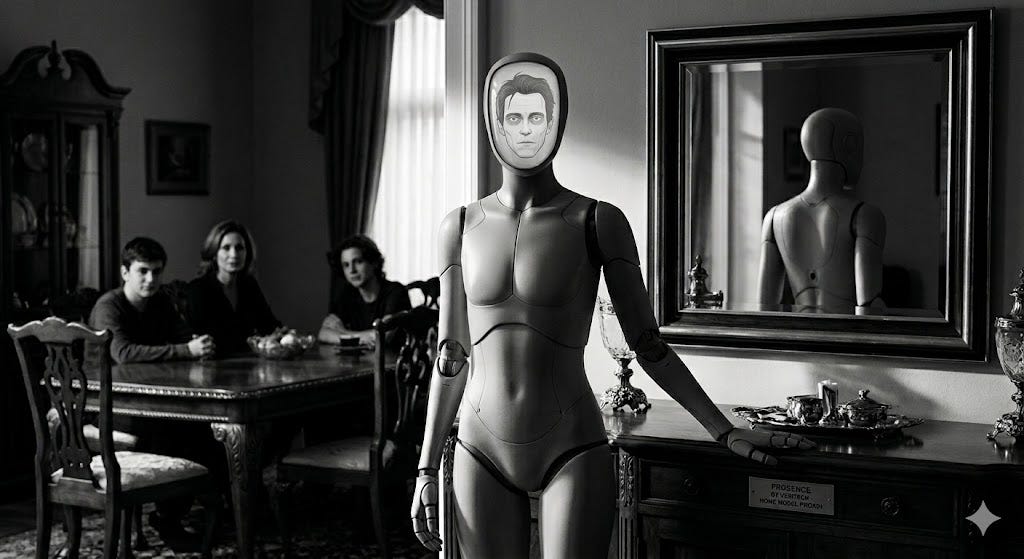
Daniel Ashford bought his Proxy three years ago, when the travel started consuming his life. Veritech Pharmaceuticals was expanding aggressively, and as senior vice president of research and development, Daniel was expected to be everywhere at once: regulatory meetings in Brussels, clinical trials in São Paulo, investor presentations in Singapore. The Proxy was the solution his marriage counsellor suggested, gently, after their third session in two months. Be present at home, even when your body is 8,000 miles away.
